
LSS6 Malaysia Budget 2026: The 2GW Solar Energy Rollout Explained
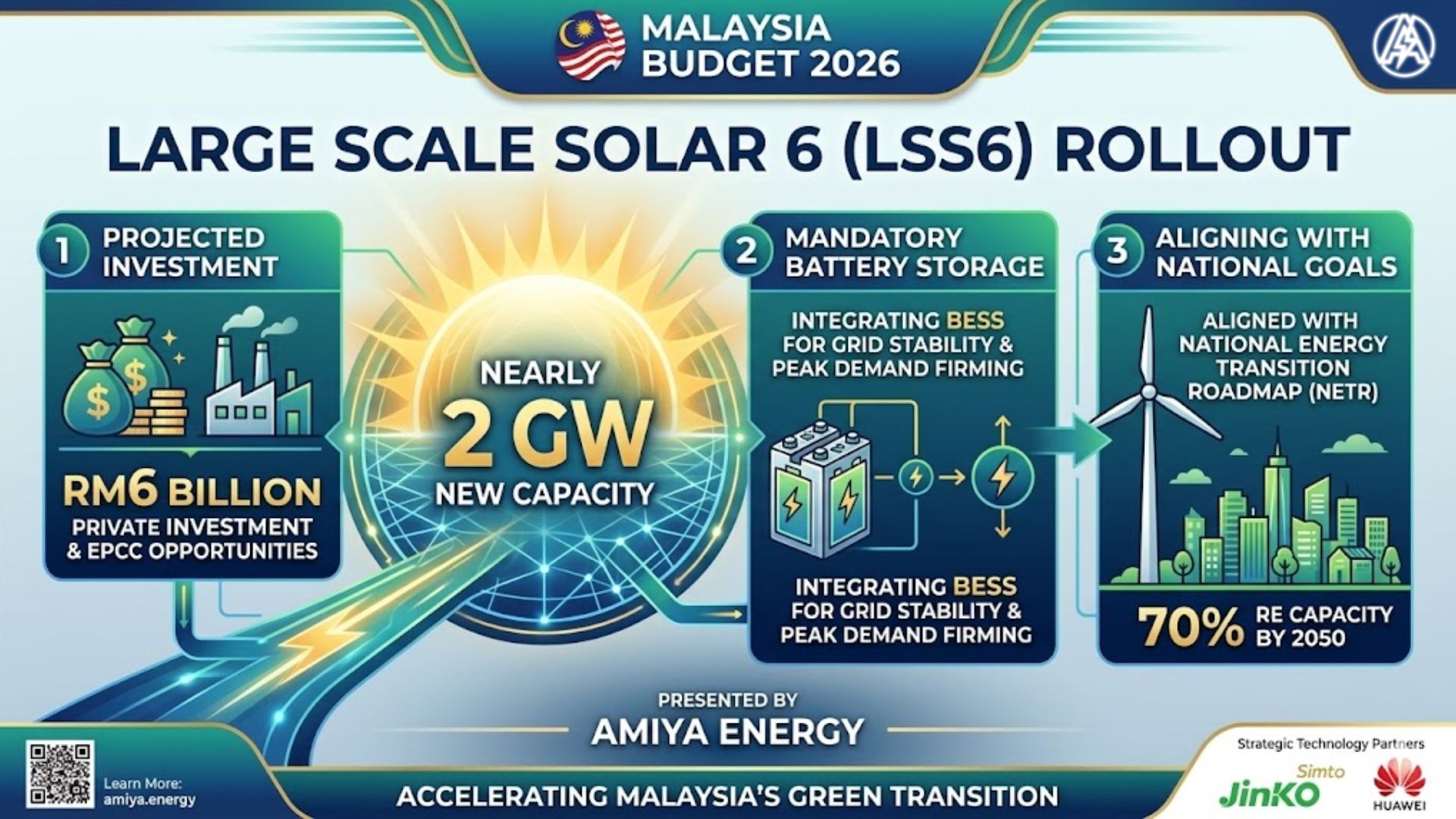
The LSS6 Malaysia Budget 2026 announcement has officially set the stage for the next massive leap in the national renewable energy sector. With a bold mandate to inject nearly 2 GW of new utility-scale capacity into the grid, this initiative is a clear signal that the transition toward the National Energy Transition Roadmap (NETR) goals is accelerating.
For commercial businesses, project developers, and the broader energy market, this rollout represents a transformative shift in how power is generated, stored, and managed.
Why the LSS6 Malaysia Budget 2026 Initiative Matters
The sheer scale of this initiative is designed to be a catalyst for economic and infrastructural growth. By targeting a 2 GW capacity expansion, the program is projected to drive approximately RM6 billion in private investments.
This capital injection will stimulate the entire solar supply chain, creating extensive opportunities for EPCC contractors, engineering firms, and local workforces. It reinforces the position of clean energy as a core pillar of the national economy.
The Mandatory Shift to Battery Energy Storage Systems (BESS)
Perhaps the most critical technical evolution in the current LSS6 framework is the integration of Battery Energy Storage Systems (BESS). In previous iterations of large-scale solar projects, solar was largely deployed as a standalone generation asset. However, adding 2 GW of intermittent power requires robust grid-firming capabilities.
BESS ensures that the national grid remains stable during midday oversupply and that clean energy can be dispatched efficiently during peak demand hours.
As utility-scale storage technology matures, pairing top-tier modules—such as Jinko solar panels—with advanced battery storage and intelligent string inverters (like the Huawei MB0 and MAP0 series) is becoming the definitive standard for ensuring maximum yield and grid compliance.
Spillover Effects for the Commercial Sector
While the primary focus of LSS6 is utility-scale generation, the ripple effects will directly benefit the commercial and industrial (C&I) sectors. The massive procurement demands will drive economies of scale, making high-efficiency solar hardware and commercial BESS solutions more accessible to private businesses.
Furthermore, this national push aligns seamlessly with other ongoing frameworks:
Corporate Renewable Energy Supply Scheme (CRESS): Opening new avenues for corporate green energy procurement.
SELCO (Self-Consumption): Empowering businesses to generate and consume their own power.
Solar ATAP Programs: Incentivizing rooftop adoptions.
Companies looking to transition to green energy will find a more mature ecosystem, better grid infrastructure, and a highly skilled workforce ready to execute complex installations. (Insert External Link here: Link to Suruhanjaya Tenaga or the official NETR framework).
Preparing for a Sustainable Lifecycle
As the country rapidly scales its solar infrastructure to meet the 2 GW quota, lifecycle management becomes equally important. The influx of new panels and batteries necessitates a forward-thinking approach to hardware waste. Planning for the eventual decommissioning and recycling of these assets ensures that the green transition remains truly sustainable from end to end.
Navigating the Energy Transition
The shift towards a storage-integrated, high-capacity solar grid presents incredible opportunities. Whether it involves understanding the latest technical requirements, integrating smart inverters, or exploring commercial solar feasibility, staying ahead of these regulatory shifts is crucial for operational efficiency.
Amiya Energy remains committed to delivering state-of-the-art renewable solutions and comprehensive lifecycle management to help businesses optimize their energy strategies in this new era. (Insert Internal Link here: Link “Amiya Energy” to your Contact or Services page).nsectetur adipiscing elit. Ut elit tellus, luctus nec ullamcorper mattis, pulvinar dapibus leo.