
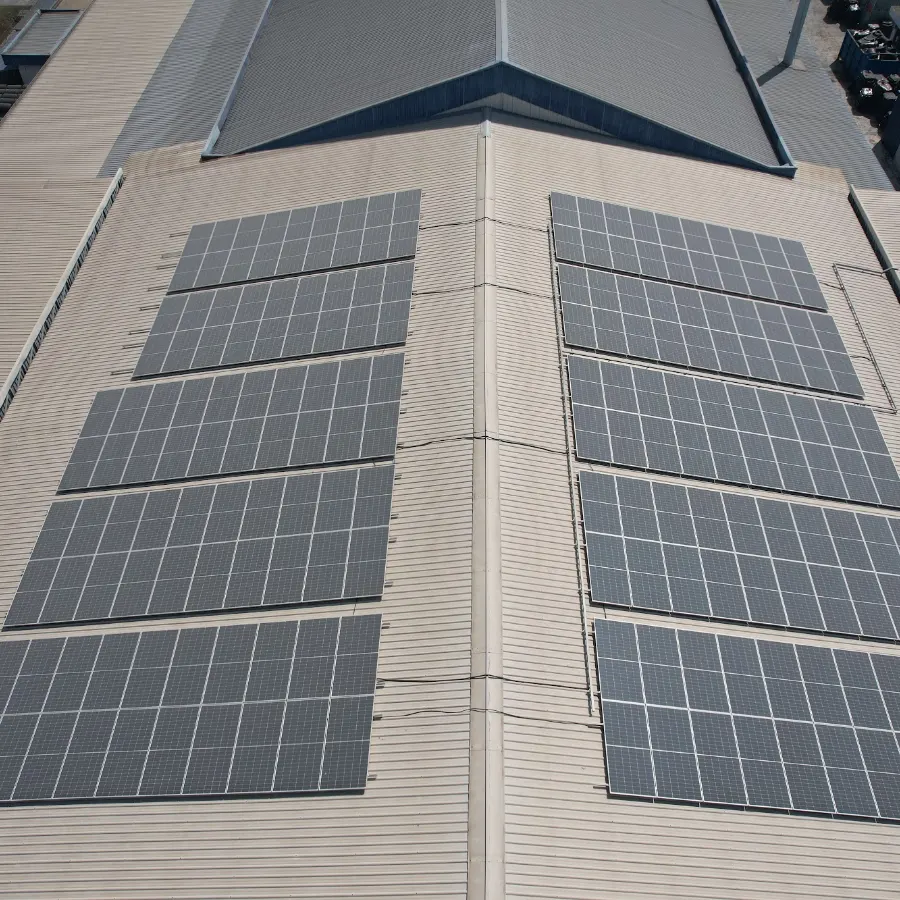
 Industrial rooftop solar
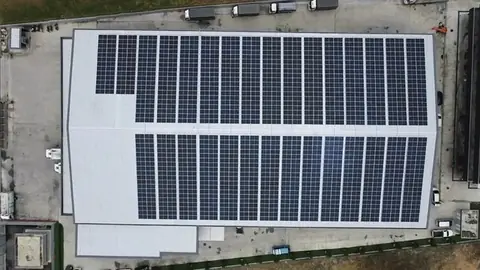 Installations in 8 states across Malaysia
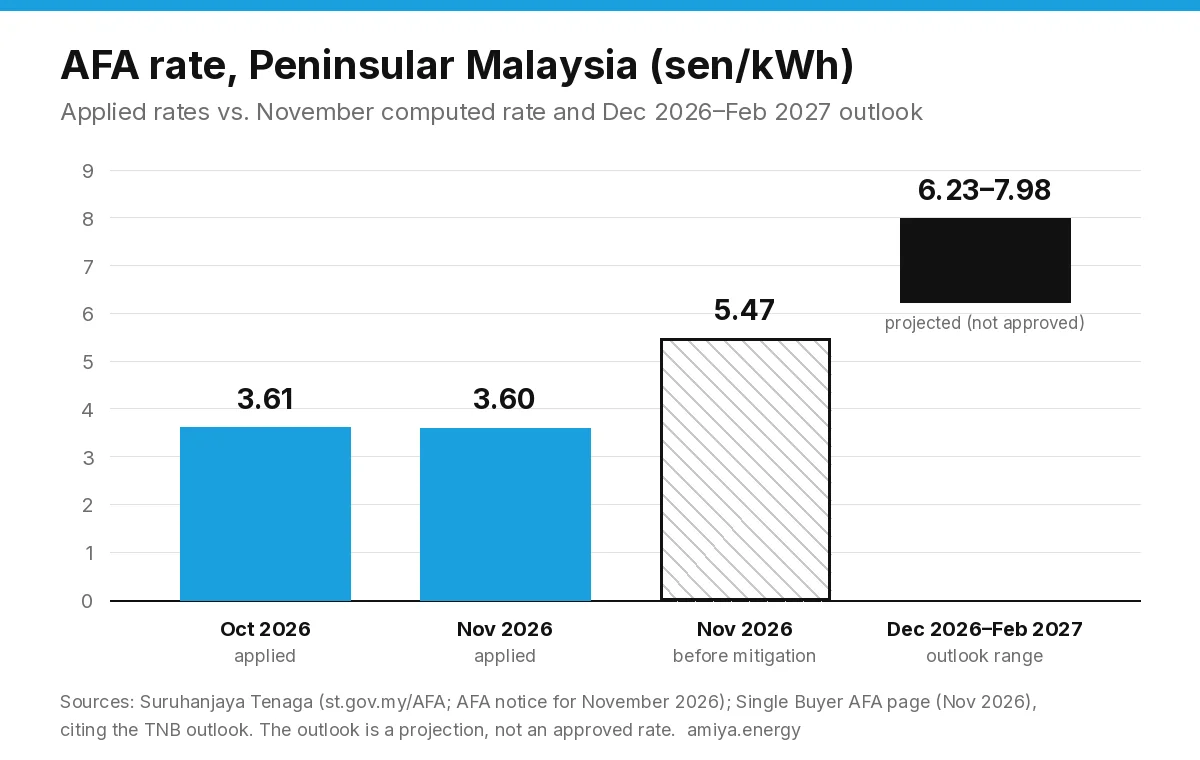 AFA Tracker · monthly rates
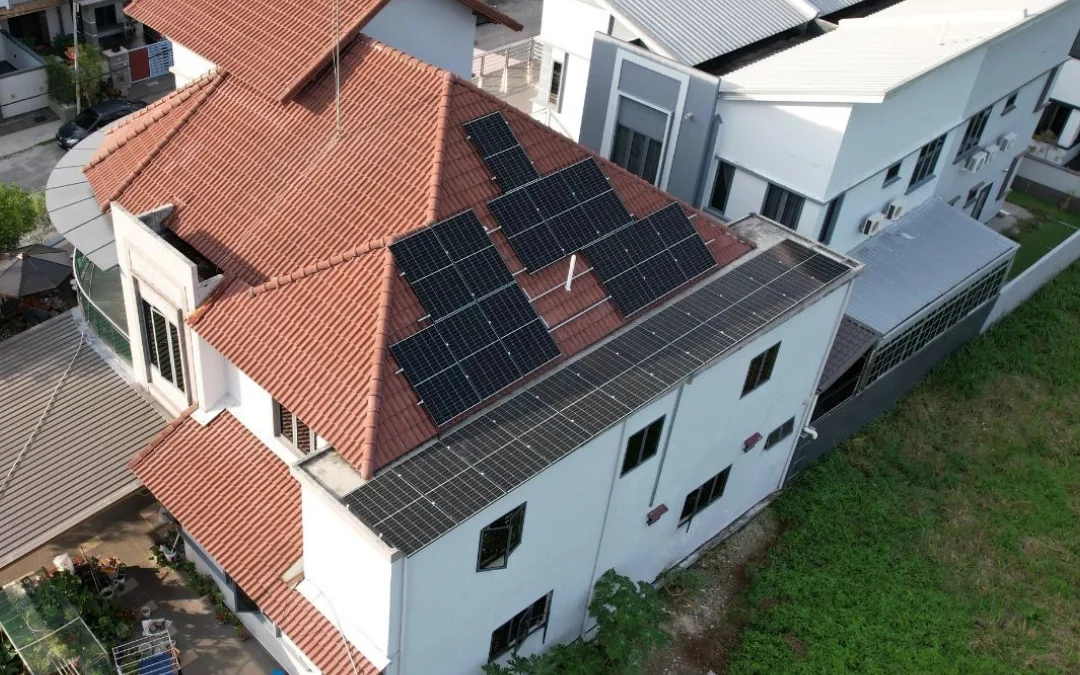 Amiya Energy installation team
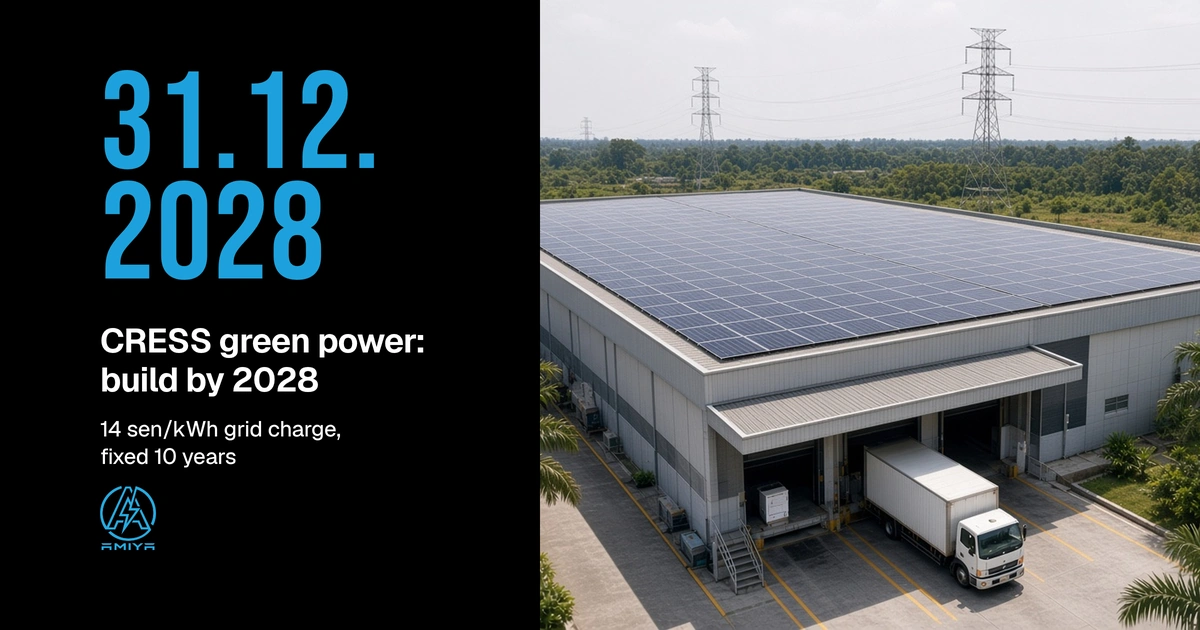
Big electricity users now have clearer CRESS Malaysia rules for buying green power. On 17 November 2026, Suruhanjaya Tenaga (Energy Commission, ST) published the fourth version of its Guidelines for the Corporate Renewable Energy Supply Scheme (CRESS). The CRESS Acceleration Package (CAP) inside those guidelines took effect on 18 November 2026.
If you run a factory, warehouse, mall or data-heavy operation and your customers keep asking about Scope 2 emissions, this update matters. Below we cover what changed, who qualifies, how Renewable Energy Certificates (RECs) work under CRESS Malaysia, and where on-site rooftop solar still fits.
What is CRESS Malaysia?
CRESS Malaysia lets a Renewable Energy Developer (RED) sell renewable electricity to a corporate “Green Consumer” through the existing TNB grid in Peninsular Malaysia. The developer and the buyer sign a Bilateral Energy Supply Contract. TNB stays the supplier of last resort for whatever the plant does not cover.
According to the ST guidelines, the key conditions are:
- Who can buy: registered high voltage (HV) and medium voltage (MV) consumers in Peninsular Malaysia.
- Plant size: the green energy plant must be at least 30 MW and directly connected to the grid. A private line between the plant and the factory is not allowed.
- Ownership: the developer must have at least 51% local ownership.
- Firm supply: a developer that cannot meet the firm output requirement must add energy storage of at least 50% of the plant’s capacity for four consecutive hours, or pay a higher system access charge.
PETRA said that since CRESS started in 2024, 11 developers and 8 green consumers have registered with the Single Buyer, covering 3,148 MW of projects.
What changed with the CRESS Acceleration Package
The main change is cost certainty. Under CRESS, developers pay a System Access Charge (SAC) to use the grid. ST’s participation criteria compare the two options:
- Before: 20 sen/kWh (firm) or 40 sen/kWh (non-firm). No fixed contract period, with reviews every regulatory period capped at 15%.
- Under CAP: 14 sen/kWh for firm supply, fixed for 10 years from the commercial operation date (COD), with a minimum 10-year contract between developer and buyer.
There is a catch for buyers. ST confirmed that green consumers pay a separate CRESS charge of 4 sen/kWh, billed through TNB. That rate is set for the current Regulatory Period 4 (RP4) and can be revised in each new regulatory period.
Consultancy Wood Mackenzie puts the combined grid access cost at about RM180/MWh (14 + 4 sen/kWh). In other words, the developer gets a fixed charge for 10 years, while the factory carries the risk that its own charge changes when tariffs are reviewed.
The 31 December 2028 deadline
CAP is a limited-time offer. A project must reach COD by 31 December 2028, and ST will not consider requests to extend that date. A project that misses the deadline loses CAP eligibility and pays whatever SAC rate applies at that time. Capacity added after the deadline is not covered either.
Wood Mackenzie notes that utility-scale solar usually needs 18 to 24 months from construction to commissioning. That leaves little time for land, permits, financing and grid connection. Its view for buyers is that delaying is “not a neutral decision”, because the most advanced projects will be signed up first.
Large players are already moving. In a Bursa filing reported by The Star on 3 November 2026, TNB Renewables, an IOI Corporation subsidiary and a consortium of 12 SMEs formed a joint venture for a 500MWac solar plant with a 250MW/1,000MWh battery energy storage system in Bahau, Negeri Sembilan, to supply green electricity to corporate customers under CRESS.
How RECs work under CRESS Malaysia
For many exporters, the certificate matters as much as the electricity. A Renewable Energy Certificate represents 1 MWh of renewable energy. In Malaysia these certificates are sold as mRECs, which TNBX redeems through the international I-REC Standard.
Under the CRESS Malaysia guidelines:
- The green attributes belong to the developer and are transferred to the green consumer under the supply contract.
- RECs must be redeemed in Malaysia according to international standards.
- If the developer sells excess energy to the grid, the green attributes for that energy go to the Single Buyer, not to you.
Practical tip: make sure your contract clearly covers REC transfer, volumes and redemption timing. Your sustainability report depends on it.
Not ready for a 10-year contract? Companies with a valid SSM registration can buy mRECs through TNBX’s mGATS platform. The certificates are retired directly to the buyer, cannot be resold, and are available to customers anywhere in Malaysia, including Sabah and Sarawak.
CRESS Malaysia or rooftop solar? Usually both
CRESS suits large MV and HV users with steady demand and long-term green targets. Under ST’s own illustration, energy the plant does not cover is still billed at the normal TNB tariff, and the green consumer also pays the separate 4 sen/kWh CRESS charge.
On-site solar works differently. Under SEDA’s Solar ATAP programme, non-domestic TNB consumers can install solar PV for self-consumption and export the surplus to the grid. System size can be up to 100% of maximum demand, capped at 1,000 kW, subject to technical assessment. Solar ATAP contracts run for 10 years. Eligible companies may also qualify for MIDA’s Green Technology Incentive.
For many factories the sensible order is:
- Use your own roof first. Rooftop solar cuts daytime grid consumption at the source.
- Cover the rest with CRESS or RECs to reach your renewable energy target.
- Check timing. If CRESS is on your list, the 2028 COD deadline means talks with developers need to start soon.
Frequently asked questions
Can any company join CRESS Malaysia?
No. Under the ST guidelines, the green consumer must be a registered high or medium voltage TNB consumer in Peninsular Malaysia, buying from a renewable plant of at least 30 MW.
Is the 14 sen/kWh rate what my factory pays?
No. The 14 sen/kWh fixed SAC is paid by the developer. Green consumers pay a separate 4 sen/kWh CRESS charge through TNB, which is set for RP4 and may be revised in future regulatory periods.
Do I get RECs under CRESS?
Yes, if your contract says so. The green attributes belong to the developer and are transferred to the green consumer under the Bilateral Energy Supply Contract. They must be redeemed in Malaysia.
What is the deadline for the CRESS Acceleration Package?
Projects must achieve their commercial operation date by 31 December 2028. ST will not consider extension requests, and late projects revert to the SAC rate in force at the time.
Plan your green power strategy with Amiya
Amiya Energy Sdn Bhd is a Malaysian solar EPCC company focused on commercial and industrial clients. We can review your TNB bills, maximum demand and roof space, then show you how much your factory can cover with its own rooftop solar before you commit to a long-term CRESS or REC contract.
Book a free consultation with Amiya and get a clear, numbers-first view of your options.
Sources
- Suruhanjaya Tenaga, Guidelines for Corporate Renewable Energy Supply Scheme (CRESS), GP/ST/No.40/2024 (Pin.1/2026), 17 November 2026: https://www.st.gov.my/sites/default/files/2026-11/GUIDELINES-FOR-CORPORATE-RENEWABLE-ENERGY-SUPPLY-SCHEME-%28CRESS%29-%28FINAL%29_PUBLISHED_17.11.2026.pdf
- Suruhanjaya Tenaga, Participation Criteria for CRESS Program (CAP vs current): https://www.st.gov.my/sites/default/files/2026-10/CRESS-Acceleration-Package-Criteria.pdf
- Suruhanjaya Tenaga, statement, 15 October 2026, ST Held Briefing on CRESS Acceleration Package: https://www.st.gov.my/sites/default/files/2026-10/ST-Statement—ST-Held-Briefing-on-CRESS-Acceleration-Package-(CAP).pdf
- PETRA media statement, 18 September 2026 (via ST): https://www.st.gov.my/sites/default/files/2026-10/System-Access-Charge-%28SAC%29—CRESS-Acceleration-Package_1.pdf
- Suruhanjaya Tenaga FAQ, Who pays the SAC under the Acceleration Package?: https://www.st.gov.my/who-pays-sac-under-acceleration-package
- Wood Mackenzie, 17 November 2026, Malaysia’s CRESS Acceleration Package improves project economics, but execution remains the critical test: https://www.woodmac.com/press-releases/malaysias-cress-acceleration-package-improves-project-economics-but-execution-remains-the-critical-test/
- The Star, 3 November 2026, TNB, IOI Corp tie up for 500MW solar project in Negeri Sembilan: https://www.thestar.com.my/business/business-news/2026/11/03/tnb-ioi-corp-tie-up-for-500mw-solar-project-in-negeri-sembilan
- The Edge Malaysia, 15 October 2026, CRESS charges fixed at 14 sen/kWh for developers, four sen for green consumers: https://theedgemalaysia.com/node/822063
- TNBX mGATS, FAQ: https://www.mgats.com.my/faq
- SEDA Malaysia, Solar ATAP – General: https://www.seda.gov.my/reportal/atap/solaratap-general/
- Suruhanjaya Tenaga, CRESS Acceleration Package briefing slides, 13 October 2026: https://www.st.gov.my/sites/default/files/2026-10/CRESS-Acceleration-Package-Briefing.pdf