Bill uses the TNB domestic tariff in force from 1 July 2025 (energy 27.03 / 37.03 sen, capacity 4.55 sen, network 12.85 sen per kWh, RM10 retail charge, Energy Efficiency Incentive, 8% service tax and 1.6% KWTBB). The monthly fuel adjustment (AFA) is not included because it changes every month.
Solar is estimated at 113 kWh per kWp per month, the same figure as our full Solar Calculator. Solar you use directly cuts your bill at the full rate. Extra solar sent to the grid is credited at the energy charge only, as under Solar ATAP, and unused credit is not carried forward.
Solar ATAP limits home inverters to 5 kW on single-phase and 15 kW on three-phase supply. We size the system to your usage and supply type.
This is an estimate, not a quotation. Your real saving depends on your roof, shading and how you use electricity. We confirm the numbers with a free site check.
How to read the solar irradiance numbers on this page
Solar irradiance is the solar power arriving on a surface, measured in watts per square metre (W/m²). Added up over a day, it becomes solar energy in kWh/m²/day. This page reads live weather and solar irradiance data from Open-Meteo, an open weather API.
Higher solar irradiance means more energy is available to a solar PV system, but output also depends on panel orientation, shading, temperature and system losses. For long-term averages, the World Bank’s Global Solar Atlas publishes solar resource maps for Malaysia.
Weather services split solar irradiance into components. Open-Meteo’s API documentation lists shortwave solar radiation (GHI), direct solar radiation, diffuse solar radiation (DHI), direct normal irradiance (DNI) and global tilted radiation (GTI).
GHI (global horizontal irradiance) is the total sunlight reaching a flat, horizontal surface. It includes both the direct beam from the sun and the diffuse light scattered by clouds and the atmosphere.
DNI (direct normal irradiance) is the direct beam measured on a surface held perpendicular to the sun’s rays. DHI (diffuse horizontal irradiance) is the scattered part only. On cloudy days a larger share of the light arriving is diffuse.
GTI (global tilted irradiance) is the irradiance on a surface at a chosen tilt and orientation, which is closer to what an angled solar panel receives. Because Malaysia is near the equator, panel tilt and azimuth change GTI less than they would at higher latitudes, but shading and roof direction still matter.
Daily totals are often described as “peak sun hours”: a day with 4.5 kWh/m² of solar energy is equivalent to 4.5 hours at 1,000 W/m², the irradiance used for standard panel ratings. Treat any single reading as a snapshot; for system sizing, engineers use long-term averages and on-site checks rather than one day’s weather.
Solar irradiance also varies through the day. It is low just after sunrise, highest around solar noon when the sun is highest in the sky, and falls again towards sunset. Passing clouds can make readings rise and drop within minutes, which is normal. A solar PV system’s output follows the same daily curve, which is why it pairs well with businesses that use most of their electricity in the daytime.
If you want to know what these numbers mean for your own site, our team can review a recent TNB bill with you during a consultation and explain the assumptions behind any estimate.
Amiya EnergySolar consultant · usually replies fast
Hi! 👋 Book a free consultation. Just share these details on WhatsApp:
1Name
2Phone No (WhatsApp)
3Estimated TNB Bill
4Address
5Email Address
🔒 All information provided is confidential and protected. We will not share your information without permission.

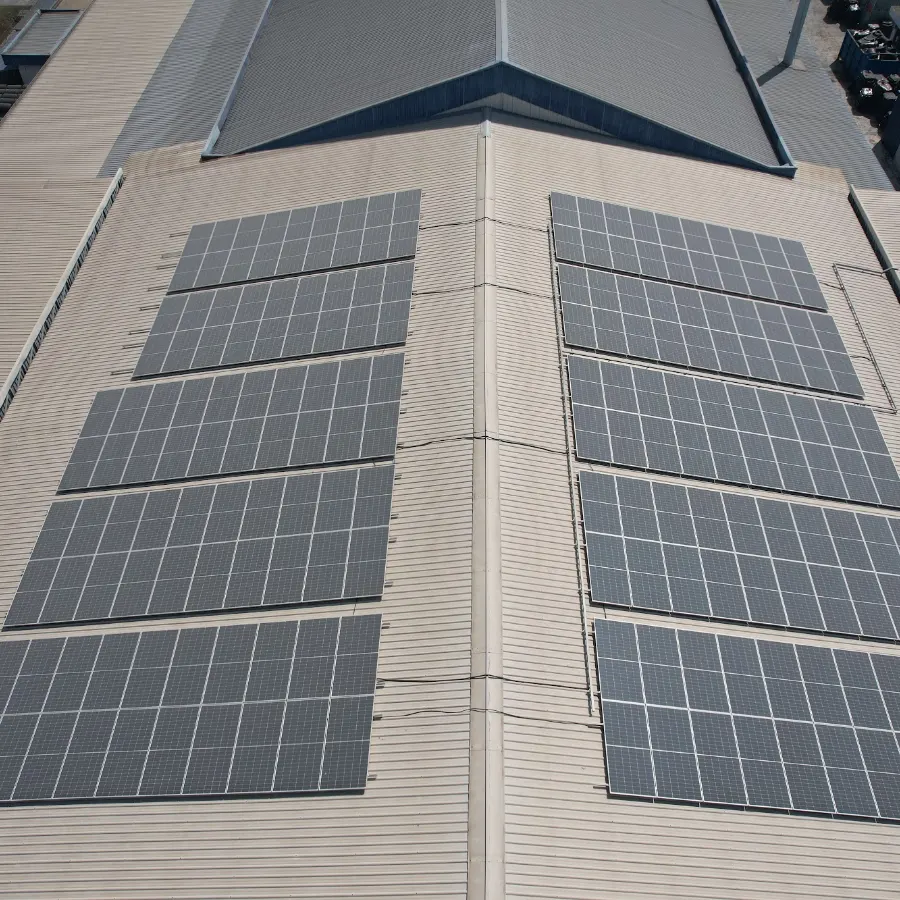 Industrial rooftop solar
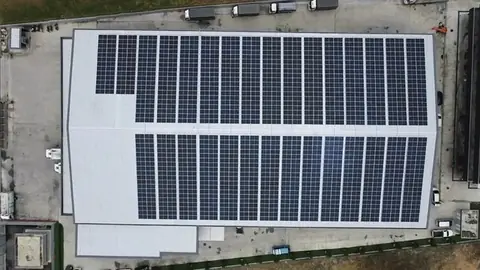 Installations in 8 states across Malaysia
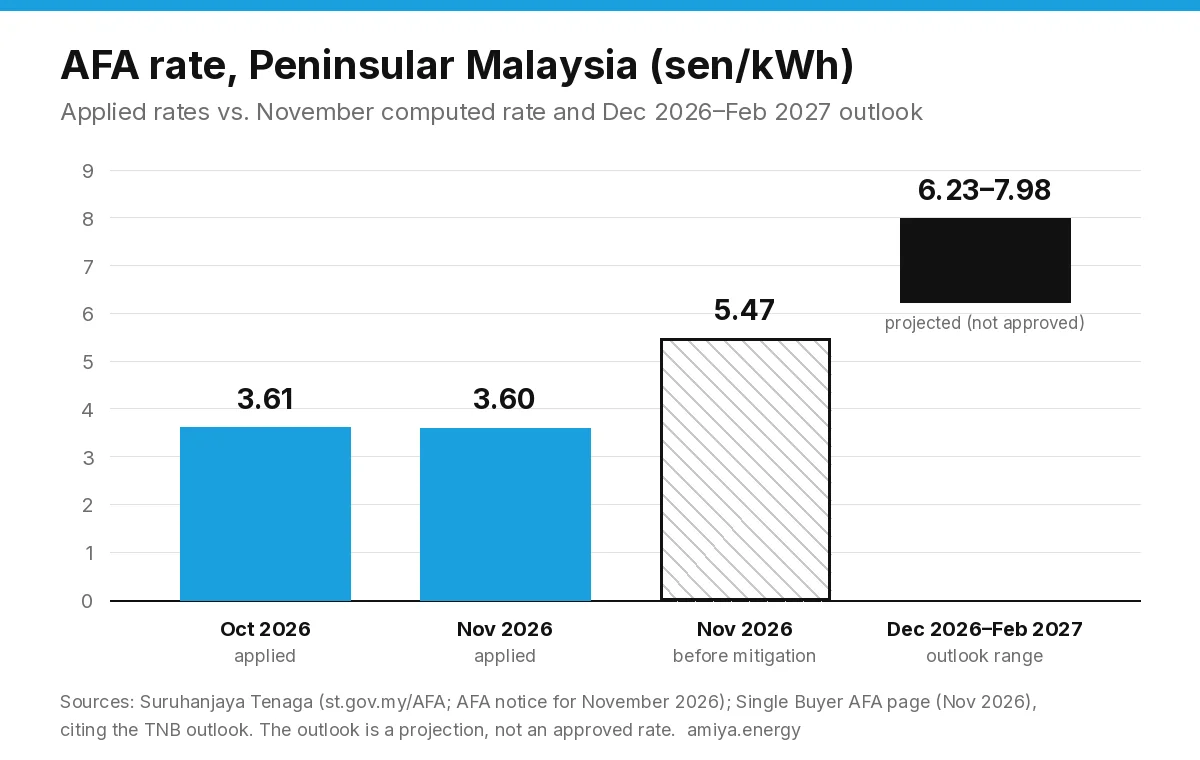 AFA Tracker · monthly rates
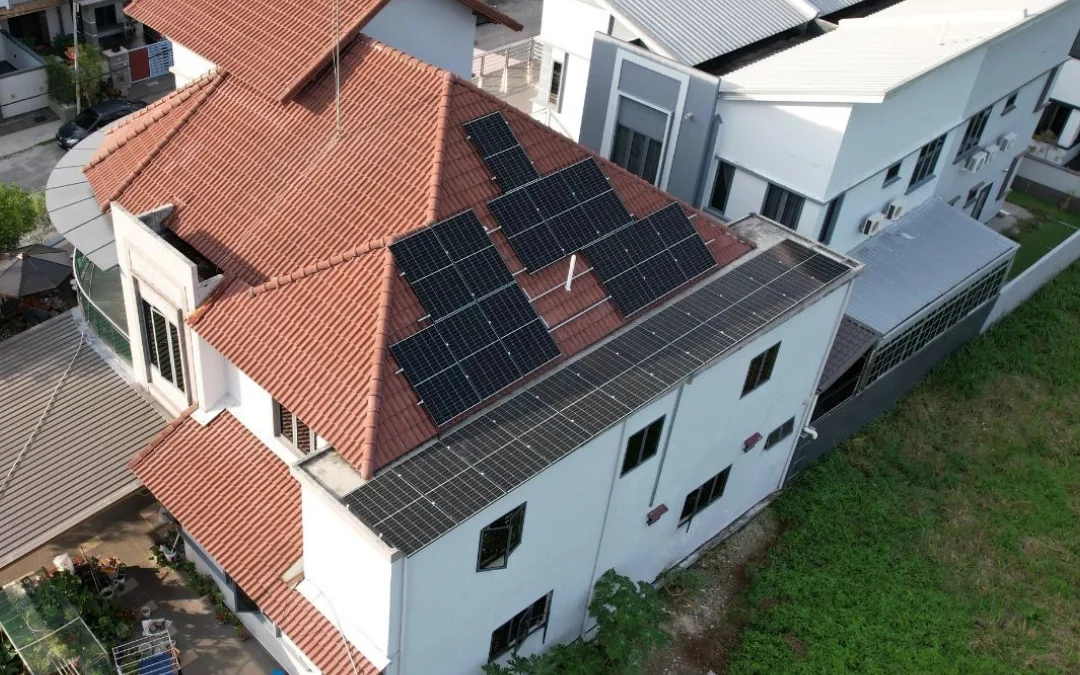 Amiya Energy installation team