
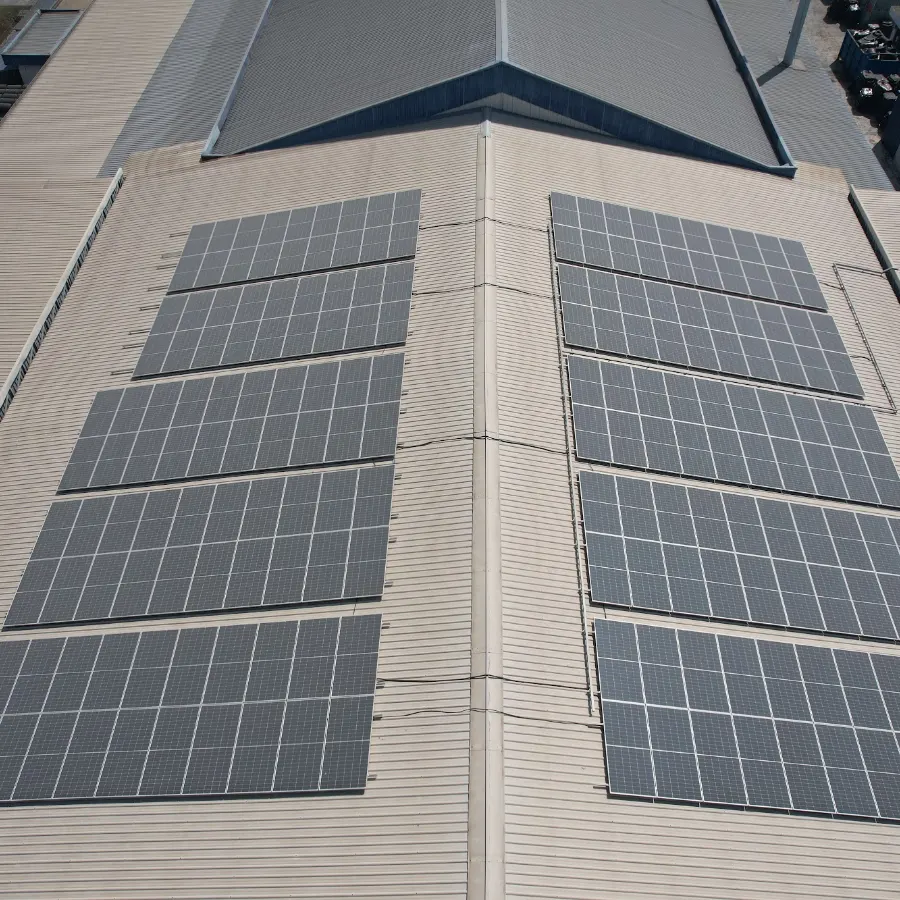
 Industrial rooftop solar
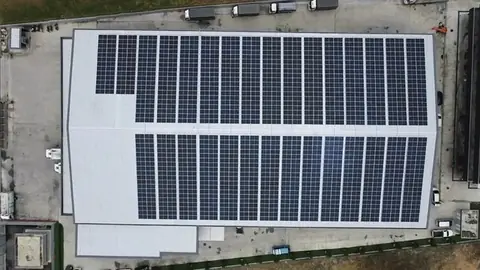 Installations in 8 states across Malaysia
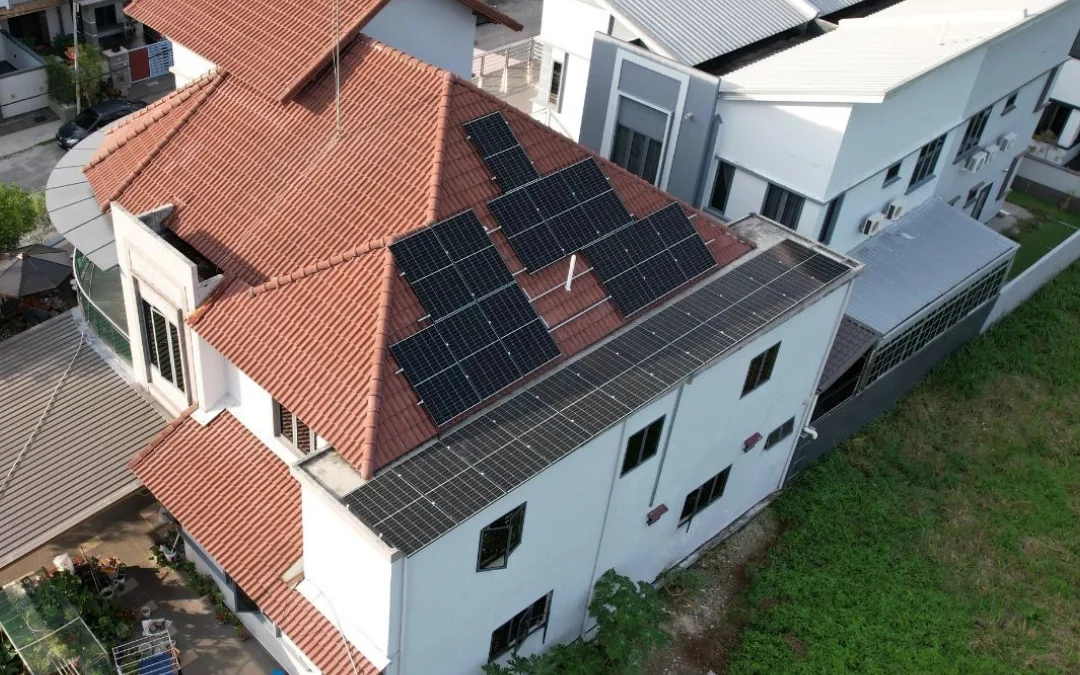 Amiya Energy installation team
Your TNB bill is the most reliable record you have of how a factory, warehouse or office actually uses electricity. Reading it properly is the first step before any tariff change, efficiency project or rooftop solar decision.
In this guide:
- The main parts of a C&I TNB bill
- Maximum demand, in TNB’s words
- The AFA line on your TNB bill
- A 7-step TNB bill check
- Why a TNB bill can rise when output is flat
- Why this matters for rooftop solar
- TNB bill FAQ
A commercial or industrial TNB bill is more than a single kilowatt-hour total. For many factories and larger commercial accounts, the bill also records maximum demand, and the rates themselves changed under TNB’s Electricity Tariff Restructuring effective 1 July 2025. This guide explains the parts of the bill in plain English, using TNB’s own public descriptions, and points you to the official pages for current rates.
We do not reprint tariff tables here. Rates and tariff names are updated by TNB. Always check https://www.mytnb.com.my/tariff and your own bill.
The main parts of a C&I TNB bill
TNB’s business “understand your bill” pages describe the components below. Some wording on those pages is still labelled as applying before 1 July 2025, so use them for what the lines mean, and use the tariff page for what you pay now.
- Tariff category. Your bill states the tariff assigned to the premise (commercial, industrial, and so on). That category decides which rate structure applies.
- Meter number and readings. Each meter has a unique serial number. Usage for the period is the difference between the current and previous reading. TNB may issue an actual reading or an estimated reading (for example if the meter could not be accessed). An estimate is later reconciled.
- Consumption (kWh). This is the energy you used, in kilowatt-hours. It is the “how much electricity” line. Medium- and high-voltage accounts are billed on the energy rate stated for their tariff. Low-voltage commercial, industrial and agriculture accounts have historically used block rates; confirm the current structure for your tariff on TNB’s tariff page, because the 1 July 2025 restructuring changed published rates.
- Maximum demand (kW), where it applies. See the next section. This is not the same as kWh.
- Billing period and proration. TNB notes that if a billing period is longer than 35 days, a proration factor can apply to tariff blocks.
- Minimum monthly charge. TNB has published minimum charges that can apply when usage is very low or zero. The figures on the older “bill component” page were tied to the pre-1 July 2025 information. Check the current tariff page and your bill rather than relying on a copied ringgit amount.
Official explainers:
- Bill layout: https://www.mytnb.com.my/business/understand-your-bill/bill-layout
- Bill components: https://www.mytnb.com.my/business/understand-your-bill/billing-component
- Maximum demand: https://www.tnb.com.my/commercial-industrial/maximum-demand
- Current tariff information: https://www.mytnb.com.my/tariff
Maximum demand on a TNB bill, in TNB’s words
TNB defines maximum demand (MD) as the highest level of electrical demand monitored in a period, usually a month. It is measured in kilowatts (kW). In TNB’s published definition, maximum demand for any month “shall be deemed to be twice the largest number of kilowatt-hours (kWh) supplied during any consecutive thirty minutes in that month.”
On the bill, the kW charge is recorded MD multiplied by the MD rate for your tariff. TNB says it charges MD to larger customers at medium and high voltage because those customers impose a peak load that the system must be able to meet. TNB also states that small customers at low voltage are generally charged on energy only, because their peak load is low.
That is why two factories with similar monthly kWh can have very different bills: a short, sharp peak can set a high MD for the whole month. TNB’s own suggestions for managing MD include staged starting of motors, shifting some operations away from peak periods where a peak/off-peak tariff applies, and reviewing any demand-related schemes TNB currently offers. We will not quote outdated scheme names or rates as if they were still in force.
If you want a longer walk-through of time-of-use pricing, see our published guide: TNB Time of Use tariff guide. Confirm any peak and off-peak windows against your current tariff schedule.
What changed on 1 July 2025
TNB’s myTNB materials state that a new electricity tariff structure took effect on 1 July 2025. Bills that straddle that date can show a mix of old and new rates for the days before and after 1 July 2025. For anything billed after that, use the current tariff page, not a pre-restructuring example calculation.
Your bill also carries the monthly Automatic Fuel Adjustment (AFA), charged per kWh at a rate the Energy Commission sets each month. For the current rate and what it means for C&I sites, see AFA surcharge November 2026: what 3.60 sen/kWh means for factories.
The AFA line on your TNB bill
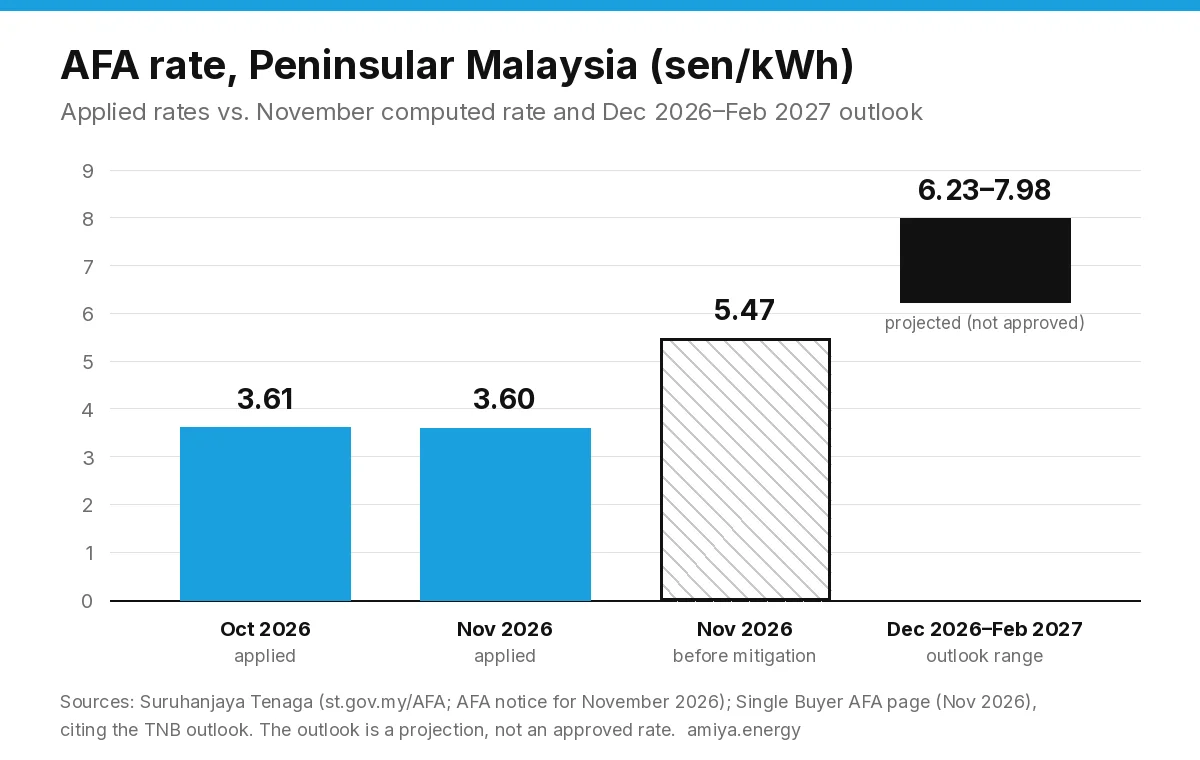
Since 1 July 2025, a commercial or industrial TNB bill in Peninsular Malaysia also reflects the Automatic Fuel Adjustment (AFA). The Energy Commission (Suruhanjaya Tenaga, ST) reviews it every month against the fuel and generation cost baseline of the Fourth Regulatory Period (RP4), and it can be a surcharge or a rebate (ST Monthly AFA Rate).
For 1 to 30 November 2026, ST set the AFA at RM0.0360/kWh, compared with RM0.0361/kWh in October 2026 (ST notice). Because it is charged per kWh, the AFA on your TNB bill rises and falls with your monthly consumption, not with your maximum demand.
Single Buyer, citing TNB, publishes a short outlook for the coming months (Single Buyer AFA page). For what the current figures mean for factories, warehouses and offices, read our AFA surcharge November 2026 guide.
A 7-step TNB bill check for factories, warehouses and offices
Use this routine each month. It needs no special software, only your TNB bill and a spreadsheet.
- Confirm the tariff category. Make sure the tariff printed on the TNB bill matches the premise and voltage level. Check it against TNB’s current tariff page.
- Check actual vs estimated readings. An estimated reading is reconciled later, so a large swing on the next TNB bill may be a correction, not a real change in use.
- Record total kWh. Track it monthly against production volume or occupied floor area.
- Record maximum demand (kW). Note the month’s MD and, if you can, the date and time it was set.
- Record the AFA line. Multiply your kWh by the published rate for that month to check the figure on the TNB bill.
- Check the billing period. TNB notes that a period longer than 35 days can trigger proration, which changes how blocks are applied.
- Keep twelve months together. A full year of TNB bills shows seasonal patterns, peak months and how the AFA has moved.
If your account is on a peak and off-peak structure, compare the periods with our TNB Time of Use tariff guide.
Why a TNB bill can rise even when output is flat
Finance teams often ask why the TNB bill went up while production stayed the same. Based on the bill components TNB and ST describe, the usual reasons are:
- A new maximum-demand peak. One short, sharp half-hour, such as several large motors starting together, can set a higher MD for the whole month. See our peak shaving guide.
- A change in the monthly AFA. The rate is reviewed every month, so the same kWh can cost a different amount from one TNB bill to the next.
- A longer billing period or an estimate reconciliation. Both can make one TNB bill look out of line with the previous month.
- A tariff change. Bills spanning 1 July 2025 can mix old and new rates, as explained above.
Why your TNB bill matters for rooftop solar
Rooftop solar reduces the kWh you import from TNB while the sun is generating. It does not automatically erase a maximum-demand charge. MD is set by your highest half-hour of demand in the month, which may still occur on a cloudy afternoon or after sunset. A properly sized system, and in some cases a battery, is designed around both energy and demand — not around a single “percent bill cut” figure. We do not invent typical savings percentages here.
Factories in Peninsular Malaysia may be eligible for Solar ATAP or SELCO, depending on the site. For a broader C&I overview, see our article on commercial solar and BESS, then use the solar company Malaysia hub to open the page for your state, including Selangor & KL, Penang and Johor Bahru.
To have a bill reviewed for a factory or commercial roof, send Amiya Energy a recent TNB bill. Bring at least twelve months if you have them: that is how we see both energy and maximum-demand patterns before we propose a system.
TNB bill FAQ
What are the main lines on a commercial or industrial TNB bill?
TNB’s business bill pages describe the tariff category, meter readings, energy consumption in kWh and, for medium- and high-voltage accounts, maximum demand in kW. The monthly AFA is charged per kWh at the rate set by the Energy Commission.
What is the AFA rate on my TNB bill for November 2026?
Suruhanjaya Tenaga set the AFA for 1 to 30 November 2026 at RM0.0360/kWh for Peninsular Malaysia, compared with RM0.0361/kWh in October 2026.
Why does my TNB bill show maximum demand?
TNB charges maximum demand to larger customers at medium and high voltage because their peak load must be met by the system. TNB defines monthly maximum demand as twice the largest kWh supplied in any 30 consecutive minutes in that month.
Can rooftop solar reduce my TNB bill?
Solar used on site reduces the kWh you import from TNB while it generates. It does not automatically remove a maximum-demand charge, which is set by your highest half-hour of demand. Results depend on your load profile and roof.
Want a second pair of eyes on your TNB bill? Book a free consultation. The consultation is free; system design, roof or site assessment and installation are quoted separately.
Sources: TNB Maximum Demand page; myTNB business bill layout and bill component pages; myTNB tariff / Electricity Tariff Restructuring information (accessed 10 November 2026); Suruhanjaya Tenaga Monthly AFA Rate and November 2026 AFA notice; Single Buyer AFA page (accessed 12 November 2026). Tariff rates and scheme names can change — confirm on tnb.com.my and mytnb.com.my.