
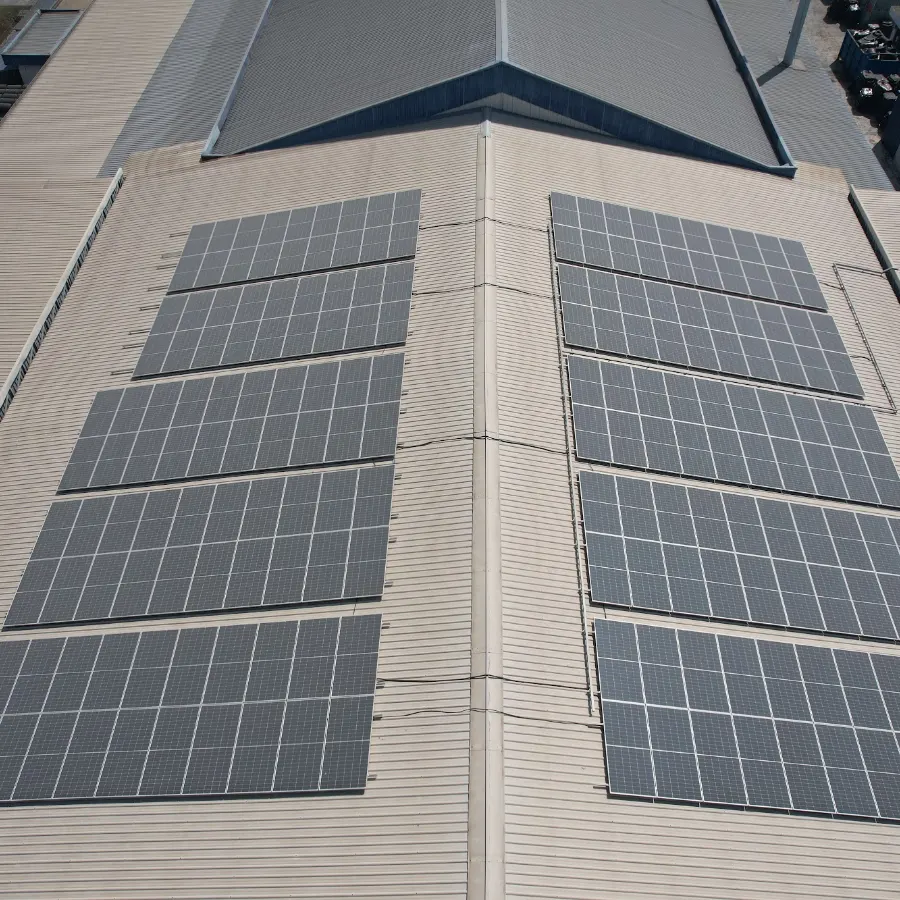
 Industrial rooftop solar
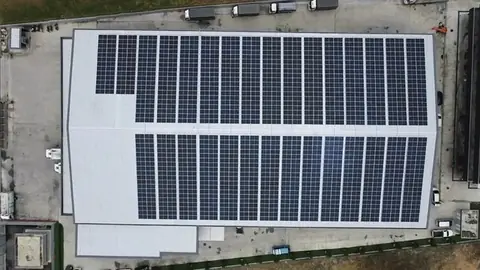 Installations in 8 states across Malaysia
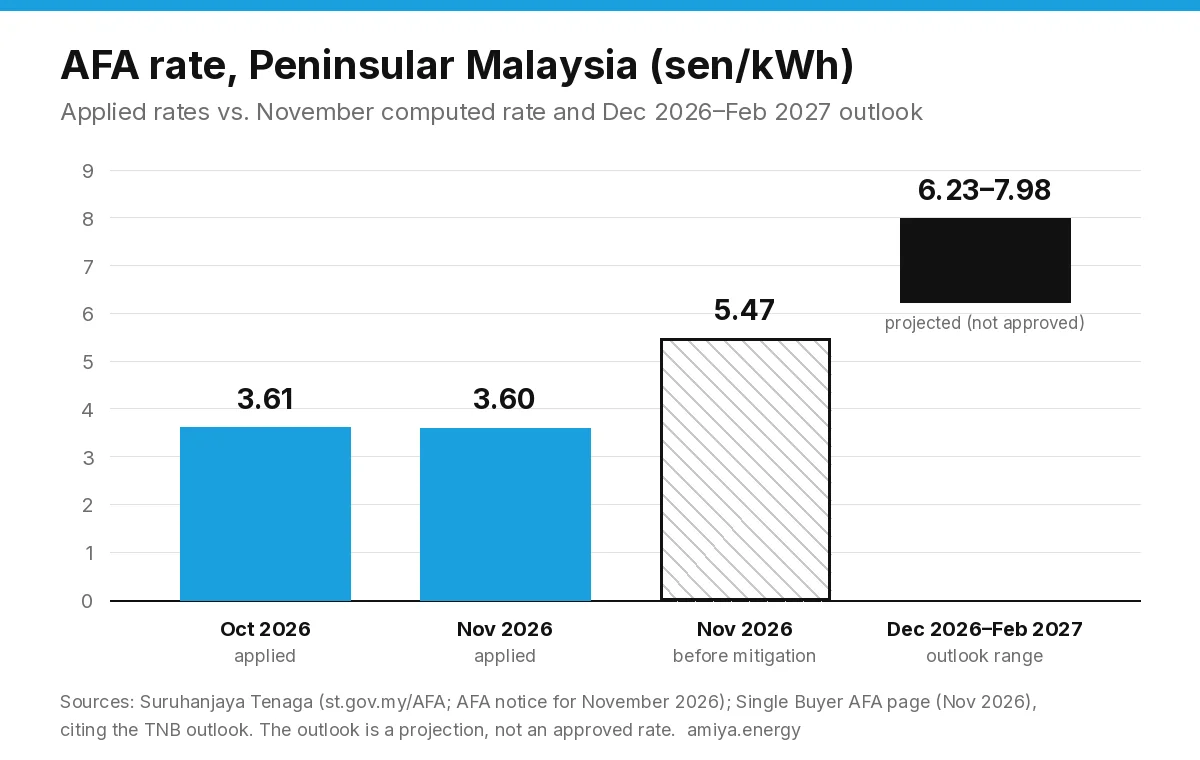 AFA Tracker · monthly rates
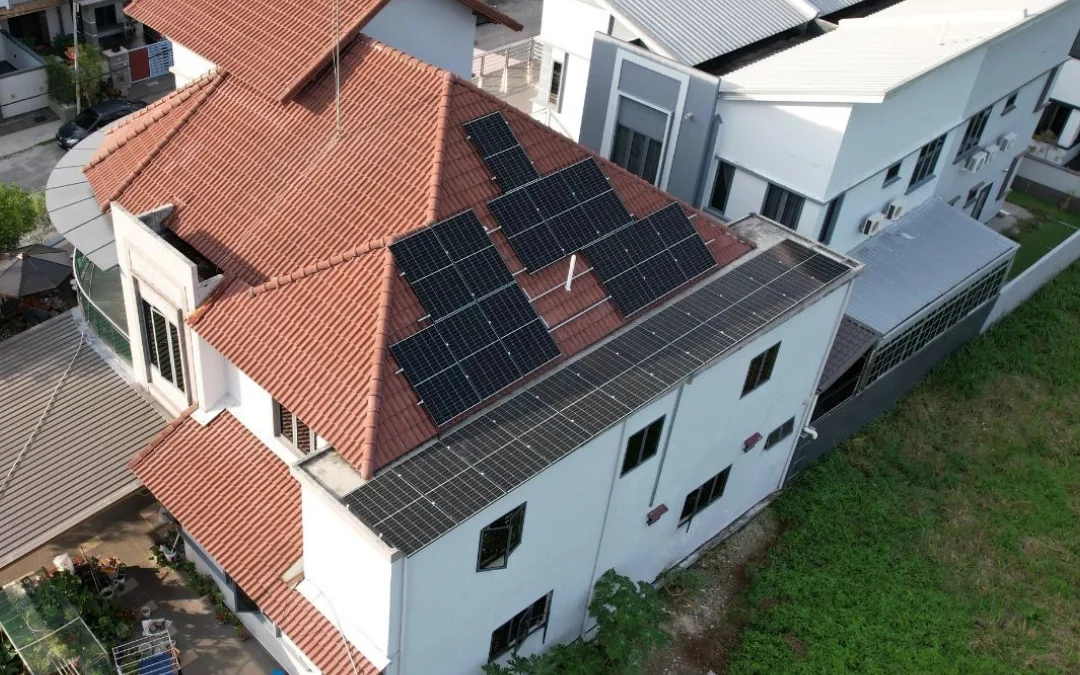 Amiya Energy installation team
This week, coverage of Nvidia’s October remarks put a simple point back in the headlines: a 1 GW AI data centre waits on power. Official projections already show data centres taking a much larger share of Malaysia’s electricity use by 2035. For factories and commercial sites, the useful question behind AI data centre solar Malaysia is narrower. How much of your daytime kWh can your roof generate, so you buy fewer units from the grid?
Amiya Energy has not worked with Nvidia, and has not built any named AI project mentioned here.
Why AI data centre solar Malaysia matters for factory roofs
In a written parliamentary reply reported on 1 July 2026, the Ministry of Energy Transition and Water Transformation (PETRA) said data-centre electricity use is projected to rise to 31%, or 73,274 GWh, by 2035, from 7%, or 10,544 GWh, in 2026, based on projections by the Electricity Supply and Tariff Planning and Implementation Committee (JPPPET).
The same reply said peak demand in Peninsular Malaysia is projected to grow at a 5.1% compound annual rate from 21.3 GW in 2026 to 33.5 GW in 2035 (Bernama; The Edge). PETRA also said data centres are being encouraged to generate their own electricity, rather than rely entirely on the grid.
On 12 November 2026, Investment, Trade and Industry Minister Datuk Seri Johari Abdul Ghani said operators will be required by law to disclose electricity use and GPU imports, and that unused booked capacity will still be billed — for example, if a site books 100 MW and uses 50 MW (Malay Mail, 12 November 2026).
At Nvidia’s GTC Berlin keynote on 21 October 2026, Jensen Huang estimated a 1 GW AI data centre at about US$50 billion to build and about US$40 billion in annual revenue, so a three-month delay would defer about US$10 billion of revenue. Those are Nvidia’s estimates, not Amiya calculations, and they describe a gigawatt-scale facility, not a Malaysian factory roof. They were restated this week in The Motley Fool, 14 November 2026.
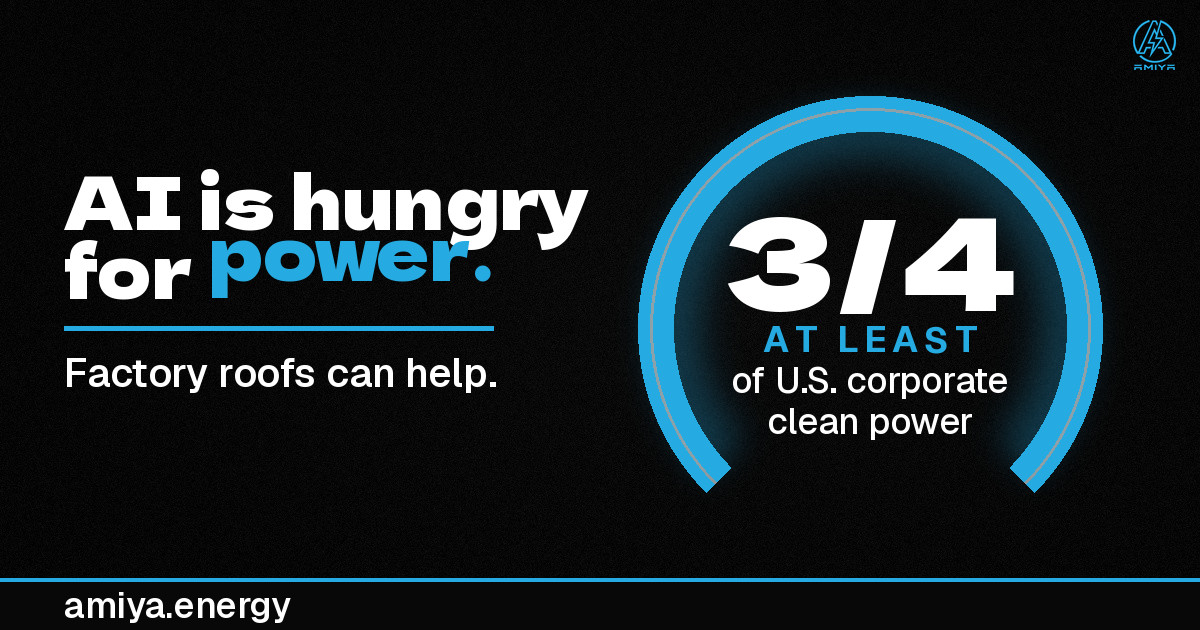
The same constraint shows up in how large AI operators buy power. At COP31, Nvidia’s head of sustainability, Josh Parker, said hyperscalers were behind at least three-quarters of the clean power that U.S. companies bought last year (Quartz, updated 11 November 2026). Those purchases are a U.S. corporate figure, not a Malaysian factory statistic. The takeaway: AI growth is constrained by electricity, and Malaysia is already planning for that load.
What this week’s Intel REC agreement tells factories
On 16 November 2026, Deputy Prime Minister Datuk Seri Fadillah Yusof officiated the launch of Gading Kencana’s 43 MWp solar farm under the Corporate Green Power Programme (CGPP). Intel has entered into a 15-year agreement to purchase 53,000 Renewable Energy Certificates (RECs) a year from the project (Malay Mail, 16 November 2026). He also urged companies to turn green commitments into real investment, not leave them as pledges or lines in an annual report (Berita RTM, 16 November 2026).
A REC is one way to account for renewable energy. It is not the same as using solar generated on your own roof, which is the usual value of AI data centre solar Malaysia for a factory. Solar ATAP is mainly for self-use.
The Energy Commission’s guidelines (GP/ST/No. 60/2025, paragraph 20) assign the value of any greenhouse-gas-reduction credits from that generation “solely for the benefit of the Solar ATAP Consumer” (Energy Commission guidelines). That is not automatic REC issuance. Amiya Energy does not issue RECs. For most C&I sites, the first value of a rooftop system remains the kWh it replaces during the day.
How on-site solar reduces grid kWh on a C&I bill
For a factory or warehouse, AI data centre solar Malaysia is not about powering a gigawatt campus. It is about cutting the daytime grid kWh on your own bill. Every grid kWh a factory, warehouse or office draws in Peninsular Malaysia currently carries a monthly Automatic Fuel Adjustment (AFA). Suruhanjaya Tenaga (ST) set the AFA for 1 to 30 November 2026 at RM0.0360/kWh, or 3.60 sen/kWh (ST Monthly AFA Rate).
Solar electricity used on site is not drawn from the grid, so those kWh are not billed by TNB and do not carry that month’s AFA. Remaining grid kWh still do. Solar does not cancel AFA or remove other bill items such as maximum demand. How much a roof can cover depends on your load profile, roof area and tariff. We do not publish a generic savings percentage. For the November rate and a factory checklist, see our AFA surcharge guide for November 2026.
What Solar ATAP allows — and what it does not
Solar ATAP is Peninsular Malaysia’s current consumer solar programme, implemented by the Sustainable Energy Development Authority (SEDA) and regulated by the Energy Commission. SEDA says it started on 1 January 2026. Generation is mainly for the consumer’s own use; surplus may be exported for a bill credit (SEDA Solar ATAP; SEDA FAQ).
For non-domestic customers, SEDA allows installed capacity of up to 100% of the site’s Maximum Demand, subject to technical assessment, with a maximum of 1,000 kW. Surplus is credited at the Average System Marginal Price (SMP), so C&I systems are usually sized around daytime self-use. The contract tenure is ten years from commencement. A SEDA Registered PV Service Provider (RPVSP) submits the application through eATAP.
A 1 GW AI data centre is a thousand times the 1,000 kW Solar ATAP cap. That is the practical limit of AI data centre solar Malaysia under Solar ATAP: it can help a factory or commercial building cut daytime grid kWh. It is not a substitute for a gigawatt-scale power plan. Larger on-site generation may fall under other official Energy Commission programmes.
Amiya Energy is a SEDA-registered solar company and can act as the Registered PV Service Provider for an eligible C&I application. We size a system from your TNB bills, check the roof, and handle the SEDA and TNB paperwork.
FAQ
Can rooftop solar power an AI data centre in Malaysia?
AI data centre solar Malaysia can offset part of a facility’s own daytime use if the site is an eligible TNB consumer and the array fits the programme rules. It cannot be described as powering a gigawatt-scale AI data centre.
What is the Solar ATAP size limit for factories and commercial sites?
Up to 100% of maximum demand, subject to technical assessment, with a maximum of 1,000 kW (SEDA FAQ). Roof area, structure and network studies still decide what can actually be built.
Does on-site solar reduce the AFA surcharge on a factory bill?
AFA is charged per kWh drawn from the grid. ST set the November 2026 rate at RM0.0360/kWh for Peninsular Malaysia (ST). Solar used on site does not carry AFA; remaining grid kWh still do. See our AFA surcharge guide.
Does a factory Solar ATAP system automatically issue RECs, like Intel’s agreement?
No. Intel’s 15-year purchase of 53,000 RECs a year is a CGPP arrangement with a utility-scale solar farm (Malay Mail, 16 November 2026). A Solar ATAP rooftop is mainly for on-site use and does not automatically issue RECs. Amiya Energy does not issue RECs.
Related reading
More on factory rooftops, tariffs and the programmes behind AI data centre solar Malaysia:
- Solar ATAP + BESS for Malaysian Factories (2026)
- AFA Surcharge November 2026: What 3.60 sen/kWh Means for Factories
- Industrial Solar Malaysia
- How to Read a Commercial & Industrial TNB Bill
Talk to Amiya Energy
If you are reviewing AI data centre solar Malaysia for a factory, warehouse or commercial building, book a free consultation. The consultation is free; system design, roof or site assessment and installation are quoted separately. Send a recent TNB bill, and we will explain how much of your daytime grid kWh a Solar ATAP system could realistically cover.
Book a free consultation at amiya.energy.
WhatsApp: +60 19-776 6992
Sources (accessed 17 November 2026, Asia/Kuala_Lumpur, UTC+8):
- Bernama, 1 July 2026, “Electricity Consumption Of Data Centres Expected To Surge To 31 Pct By 2035”: https://www.bernama.com/en/news.php?id=2575423
- The Edge Malaysia, 1 July 2026, “Data centres to guzzle one-third of Malaysia’s electricity by 2035, govt taking measures to ensure supply”: https://theedgemalaysia.com/node/808955
- Malay Mail, 12 November 2026, “Malaysia to make data centre operators disclose power use, GPU imports under new law, says Johari Ghani”: https://www.malaymail.com/news/malaysia/2026/11/12/malaysia-to-make-data-centre-operators-disclose-power-use-gpu-imports-under-new-law-says-johari-ghani/242961
- Nvidia GTC Berlin keynote remarks by Jensen Huang, 21 October 2026, as restated by The Motley Fool, 14 November 2026: https://www.fool.com/investing/2026/11/14/nvidias-ousted-ceo-said-a-1-gigawatt-data-center/ — corroborating recap: https://finance.yahoo.com/technology/ai/articles/nvidia-gtc-berlin-keynote-jensen-114237092.html
- Cris Tolomia, Quartz, updated 11 November 2026, “Nvidia is pushing for data centers to be treated as community assets” (Josh Parker: hyperscalers were behind at least three-quarters of the clean power that U.S. companies bought last year): https://qz.com/nvidia-data-centers-community-asset-cop31-111126
- Malay Mail, 16 November 2026, “Malaysia targets leadership role in green energy through local expertise” (Intel 15-year, 53,000 RECs a year; 43 MWp Gading Kencana CGPP farm): https://www.malaymail.com/news/malaysia/2026/11/16/malaysia-targets-leadership-role-in-green-energy-through-local-expertise/243524
- Berita RTM, 16 November 2026, “Sektor korporat digesa jadi rakan aktif peralihan tenaga negara”: https://berita.rtm.gov.my/nasional/senarai-berita-nasional/senarai-artikel/sektor-korporat-digesa-jadi-rakan-aktif-peralihan-tenaga-negara/
- Suruhanjaya Tenaga, Monthly AFA Rate (1–30 November 2026: RM0.0360/kWh): https://www.st.gov.my/AFA
- SEDA, Solar ATAP: https://www.seda.gov.my/reportal/atap/
- SEDA, Solar ATAP general FAQ (non-domestic cap: up to 100% of Maximum Demand, maximum 1,000 kW): https://www.seda.gov.my/reportal/atap/solaratap-general/
- Energy Commission, Guidelines for Solar Accelerated Transition Action Programme in Peninsular Malaysia, GP/ST/No. 60/2025, including paragraph 20 (Environmental Attributes): https://www.st.gov.my/resources/guidelines-solar-accelerated-transition-action-programme-peninsular-malaysia
Tariff, AFA and programme rules can change. Confirm current documents on st.gov.my and seda.gov.my.